
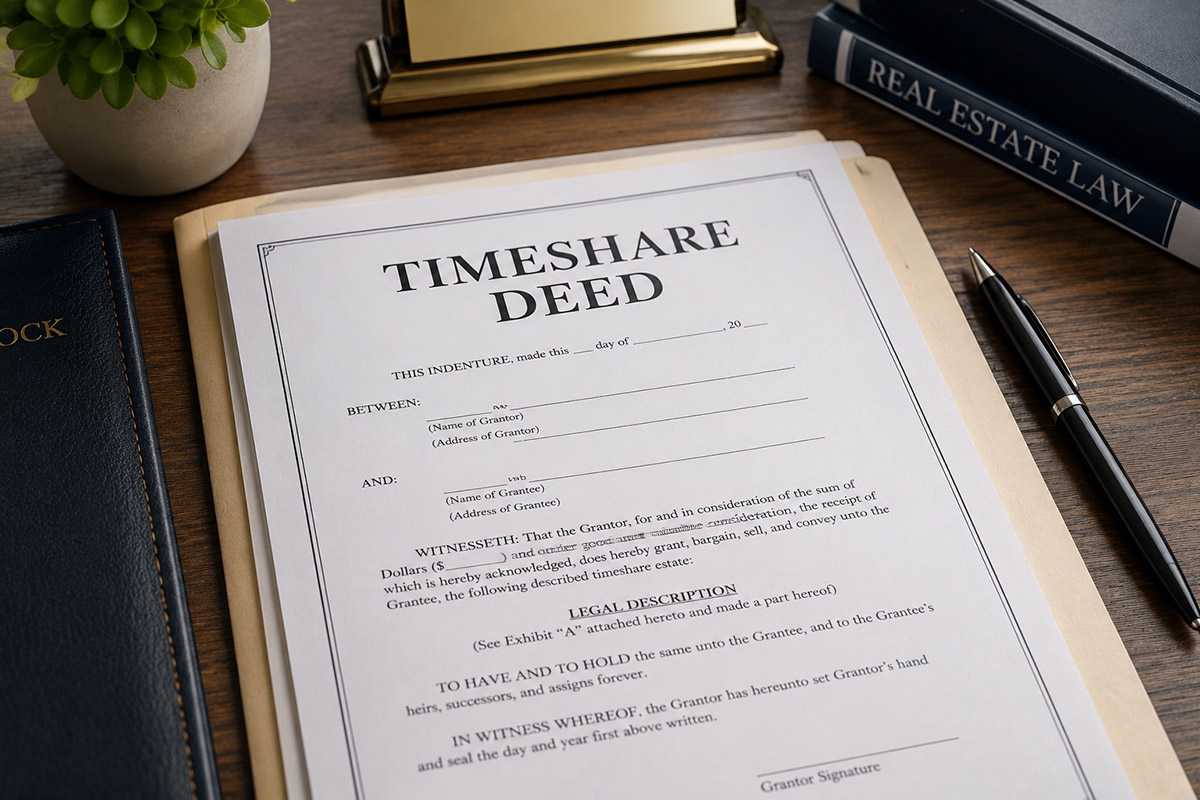
Many consumers purchase a timeshare believing they are simply buying future vacations. What they may not realize is that some timeshares involve actual ownership of real property.
If you own a deeded timeshare, your interest is recorded in the county’s public records, much like other forms of real estate. That ownership can provide certain legal rights, but it also creates long-term obligations that continue until the interest is legally transferred or otherwise resolved. Understanding what a deeded timeshare is, and how it differs from other forms of vacation ownership, is an important first step in understanding your options as an owner.
What Does It Mean to Own a Deeded Timeshare?
A deeded timeshare gives the purchaser a recorded ownership interest in real property. Instead of simply purchasing the right to vacation at a resort for a certain number of years, the owner acquires a fractional interest that is evidenced by a deed. In many traditional deeded timeshares, ownership is based on a specific week or season. For example, an owner may receive a one fifty-second interest in a condominium unit, allowing occupancy for one designated week each year.
Unlike many contractual vacation programs, a deeded timeshare generally does not expire automatically. The ownership remains in effect until it is legally sold, transferred, conveyed, or becomes part of an owner’s estate. That distinction often surprises consumers who later decide they no longer wish to own the timeshare.
Deeded Timeshares Are Different from Other Vacation Ownership Programs
Not every timeshare creates an ownership of interest in real estate. Some developers sell right-to-use memberships that provide the contractual right to use accommodations for a defined period of time. Others operate points-based programs that allow owners to reserve accommodations within a network of resorts.
While these programs may offer greater flexibility, they generally do not provide the owner with a recorded deed to real property. A deeded timeshare is different because the ownership itself is recorded in the public records, creating both legal rights and continuing responsibilities.
What Rights Come with a Deeded Timeshare?
Owning a deeded timeshare generally provides more than simply the ability to take vacations. Depending on the governing documents, owners may have the right to occupy their designated week, rent their interest to another party, participate in exchange programs, transfer ownership, sell the timeshare, or pass the ownership to their heirs.
Those rights, however, are not unlimited. Each resort operates under its own declaration, HOA documents, and governing rules that may affect how the ownership can be used or transferred. Understanding those documents is often just as important as understanding the deed itself.
Ownership Also Creates Ongoing Responsibilities
One of the most misunderstood aspects of deeded timeshare ownership is that the obligations often continue regardless of whether the owner continues using the property. Most deeded owners remain responsible for annual maintenance fees, property taxes when applicable; special assessments approved by the association, and compliance with the resort’s governing documents. These expenses frequently increase over time.
As retirement approaches or travel habits change, many owners begin asking whether the ownership still fits their financial goals. Simply deciding to stop using the timeshare generally does not end those obligations.
Why Selling a Deeded Timeshare Can Be Difficult
Many owners assume that because a deeded timeshare is real property, selling it should be similar to selling a home. Unfortunately, that is rarely the case. The resale market for many timeshares is limited. Supply often exceeds demand, and resale prices may be significantly lower than the original purchase price.
Even after finding a buyer, ownership must generally be transferred through a properly prepared deed, recorded with the appropriate county, and recognized by the resort or homeowners’ association. Because of these requirements, transferring a deeded timeshare often involves more than simply signing a contract.
When Owners Begin Looking for an Exit
Many owners seek information about deeded timeshares only after they have decided they no longer want the ownership. Maintenance fees continue to increase. Retirement changes travel plans. Health concerns arise. Family members may have little interest in inheriting ownership. These circumstances often lead owners to search for solutions.
Unfortunately, they may also attract attention from companies promising guaranteed exits, immediate transfers, or easy cancellations for substantial upfront fees. Before paying anyone to assist with a deeded timeshare, consumers should understand exactly what services are being offered and whether those services are being provided by individuals who can legally evaluate contractual rights and obligations.
Why Legal Review May Be Important
Every deeded timeshare is different. The language contained in the deed, purchase contract, governing documents, financing agreements, and association records may all affect an owner’s rights and responsibilities.
An experienced timeshare attorney can review those documents, explain the ownership structure, identify continuing obligations, and help owners better understand the options that may be available based on their individual circumstances. That review is very different from a company that simply promises a guaranteed outcome without first evaluating the legal documents involved.
Final Thoughts
A deeded timeshare is more than a vacation product. It is a recorded ownership interest in real property that carries both valuable rights and continuing obligations. For many owners, purchasing the timeshare represented years of enjoyable vacations and family memories. Over time, however, financial circumstances, travel priorities, and personal needs can change.
Understanding exactly what your deed provides, and what obligations continue with that ownership, is often the first step toward making informed decisions about the future. Whether you intend to keep your timeshare, transfer it, or simply better understand your ownership, knowing how a deeded timeshare works can help you evaluate your options with greater confidence.
Disclosure: This article is provided for general informational and educational purposes only and should not be construed as legal advice. Every timeshare ownership and legal matter is unique.
About Finn Law Group: Led by timeshare attorneys Michael D. Finn and J. Andrew Meyer, whose combined legal experience exceeds 75 years, Finn Law Group is a national consumer protection firm headquartered in St. Petersburg, Florida, that focuses exclusively on Timeshare Law. The firm’s attorneys have represented thousands of timeshare owners nationwide in matters involving timeshare cancellations, contract disputes, consumer protection, and litigation. To request a free consultation, call 727-214-0700, email info@finnlawgroup.com, or visit FinnLawGroup.com.